
For Mystique Dia, community control in education isn’t an idea for the future - it’s something she lives every day.
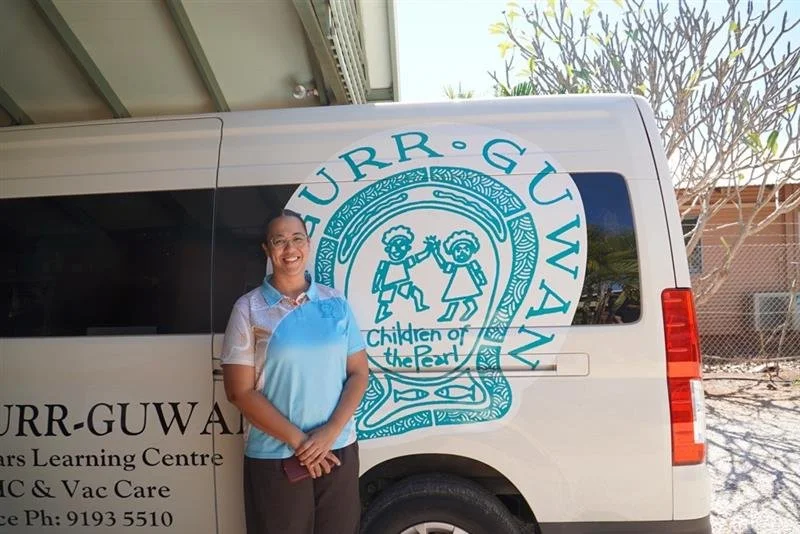
As CEO of Jalygurr–Guwan Aboriginal Corporation, Mystique leads an Aboriginal community-controlled organisation supporting children and families through early childhood and education services. A teacher by trade, she is helping create learning environments where children can be supported through culture, language, family and community, from their earliest years.
Mystique is a proud Nyul Nyul woman from the Dampier Peninsula, living, working and raising her children on Yawuru Country.
Jalygurr-Guwan supports children from birth to eight years old through long day care, OSHC, playgroups and crèche programs, with plans to expand its services to children up to 12 years old as infrastructure develops.
For Mystique, the work is deeply connected to a bigger responsibility: ensuring First Nations children grow up in education systems that recognise who they are and the knowledge they bring with them.
What does good education look like?
For Mystique, good education starts with adults being willing to give up control and work alongside children.
“Good education is the adults giving up control and working with their children on meaningful learning that supports the individual child and the journey that they’re on.”
She believes learning should respond to the individual child, recognising where they are in their journey rather than expecting every child to fit into the same model.
Why is community control important?
Mystique believes First Nations people should not simply have a say in their children’s education - they should have control over it.
While education has an important role in preparing young people for the workforce, she says First Nations children also need opportunities to learn and reconnect with culture and language, and to strengthen their relationships with family, community and Country.
For Mystique, community responsibility sits at the heart of this work.
“Everything we do is for the greater benefit of our whole community, not just for personal gain.”
She sees her work as part of an intergenerational responsibility to continue what previous generations built and create stronger pathways for the children coming after them.
What does culturally safe education look like?
For Mystique, culturally safe education begins with trust - particularly trust in First Nations communities and their knowledge.
“It’s trusting that our mob have the best interests of mob in mind.”
She believes First Nations approaches to raising, teaching and supporting children need to be respected as knowledge in their own right.
This means creating learning environments that allow children to learn through culture, language, relationships and Country, rather than expecting them to leave those parts of themselves at the door.
Mystique also challenges education systems to reconsider how children are expected to learn and behave.
“Why are we strapping them into chairs?”
For her, culturally safe education means being willing to question whether existing approaches are actually working for children.
What needs to change?
Mystique believes education systems need to move beyond consultation and give First Nations communities genuine authority in decisions affecting their children.
She wants to see emerging First Nations leaders supported to take their place in education decision-making, backed by the resources and funding needed to lead change in their communities.
“Just trust that we can make these decisions for ourselves and for our communities.”
For Mystique, community control means First Nations people having meaningful leadership and decision-making power - not simply being invited to contribute to committees or consulted after decisions have already been made.
What do you want for the next generation?
Above all, Mystique wants First Nations children to be recognised as whole children who bring their families, cultures, communities and knowledge with them into education.
“I just want them to be seen as beautiful little babies, as whole children, who bring whole little ecosystems with them into the school environment.”
She wants education systems to protect children’s curiosity, joy and sense of identity rather than diminishing them by asking them to conform to systems that may not reflect how they learn or who they are.
For Mystique, that means listening to children and being willing to change when something is not working.
“Can we just stop crushing it? Can we just stop crushing their entire worlds?”
Through her work at Jalygurr-Guwan Aboriginal Corporation, Mystique is helping demonstrate what community-led education can look like when children, families, culture and community are at the centre.